San Antonio Pool Fence Laws: What Every Homeowner Should Know
Nobody thinks about the pool fence until the inspector shows up and points at it. By then the pool's dug, the concrete's poured, and a gate hinge is somehow holding up the entire project. San Antonio has real rules about pool barriers, and they're not there to make your life difficult. They exist because a fence with the wrong gap or a gate that doesn't latch is exactly how a toddler ends up somewhere they shouldn't be. Here's what actually matters, height, gates, materials, even which plants near the fence line can get you flagged.
Why San Antonio Takes Pool Barriers Seriously
San Antonio's added a lot of pools over the last several years. Building departments have kept pace with that, for the most part. Most cities in the area work off a version of the International Residential Code, and that code spells out fence height, gate function, gap size, all of it. Inspectors care about this stuff because unsupervised pool access is one of the top ways young kids get hurt, full stop. A fence can look perfectly fine and still fail if the spacing's off or the latch doesn't sit right.
Plan reviewers also check how the fence ties into the house itself. A patio door opening straight onto the pool deck usually needs its own barrier, or an alarm at minimum. And here's where a lot of homeowners get it wrong: they assume an old fence already on the property is grandfathered in. It isn't. Not if the pool is new, and often not even if the fence itself got replaced at some point.
Height, Gaps, and Gate Requirements
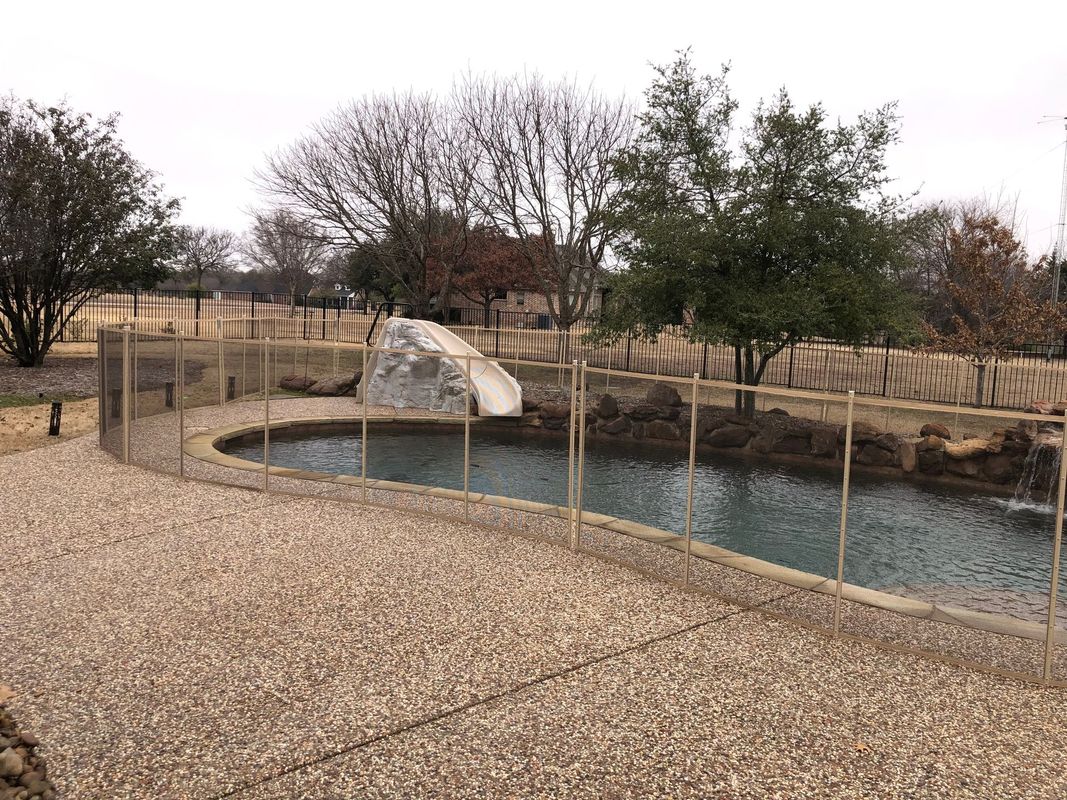
The numbers here aren't really negotiable. A compliant fence stands at least 48 inches tall, measured from the ground on the side away from the pool. Gaps and mesh openings need to be small enough that a 4-inch ball can't pass through, which is roughly the size that keeps a toddler from squeezing between rails.
Gates are where most projects lose points. Self-closing, self-latching hardware isn't a nice-to-have, it's required, no exceptions. The gate swings away from the pool, never toward it, and the latch release sits high and set back so a kid reaching over the top can't hit it by accident. Vertical bars that double as a ladder? Problem. Horizontal rails spaced too far apart? Also a problem. Fence design matters just as much as fence height, maybe more.
Working With Existing Landscaping and Slope
Not every San Antonio yard is flat, and a sloped lot changes how the fence gets measured. Since height is based on the ground at the base of the fence, a barrier on a slope needs stepped panels or careful leveling to hold that 48 inches across the whole run. Skip that detail and the permit gets held up, which happens more than you'd expect.
Retaining walls, raised beds, big potted plants near the fence, all of it can undo an otherwise good barrier if a kid could use it to climb over. Inspectors walk the whole property looking for exactly this kind of thing. Sometimes the fix is genuinely just moving one planter a few feet.
Materials That Hold Up in South Texas Heat
Summers here are brutal on cheap fencing, and it shows fast. Mesh rated for high UV resistance will outlast a basic vinyl-coated version by years, not months. Aluminum and wrought iron hold up well too, provided the coating's actually meant for outdoor use and the hardware resists rust. Pool chemicals in the air speed up corrosion more than people expect.
Wood's the weakest option of the bunch, honestly. It needs more upkeep and tends to warp in that heat-and-humidity cycle San Antonio gets every summer. If wood's still the look you're set on, budget for the maintenance, not just the install cost.
Getting the Project Approved Without Delays
Pull the permit before installation starts, not after. Most delays trace back to a fence plan nobody bothered checking against local code first. Working with an installer who already knows San Antonio's requirements usually cuts real time off the process, since they already know what inspectors look for.
Keep your paperwork too, even if it feels unnecessary at the time. Photos of the finished gate and a copy of the approved permit come in handy later, whether that's a home sale down the road or an insurance question you didn't see coming.
Building a Barrier That Actually Protects Your Family
Passing inspection is the floor, not the whole point. A well-built fence does more than satisfy an inspector; it's one less thing to think about every time someone opens the back door. Texas Pool Barrier builds fences for San Antonio families that meet code and still look like they belong in the yard, using materials suited to this climate and hardware built to hold up over years of daily use.
If you're honestly not sure whether your fence would stop a determined three-year-old, that uncertainty is the whole reason to get it checked out.
Texas Pool Barrier builds code-compliant pool safety fences for homeowners in San Antonio and across Texas. The company focuses on durable, climate-ready materials and self-latching gate systems built to meet local barrier requirements. Learn more at texaspoolbarrier.com.


.png)
Comments
Post a Comment